
Remote work is no longer a trend, it’s a global reality. For professionals around the world, collaborating with European companies offers access to exciting projects, competitive compensation, and diverse work cultures. But succeeding in remote jobs with European employers requires strategic preparation, communication skills, cultural awareness, and the right tools. In this guide, you’ll learn the steps to find remote opportunities with European companies, how to build your profile, key communication practices, legal and time zone considerations, and practical tips to thrive in a remote setup.
Introduction to Remote Work with European Companies
Remote work continues to grow in Europe with companies hiring global talent for roles in technology, marketing, design, customer support, and operations. European companies value flexibility, diverse perspectives, and digital collaboration, making them attractive employers for remote professionals.
Whether you’re an experienced freelancer or a remote work beginner, understanding how to work remotely with European companies is key to unlocking international career opportunities.

Preparing to Work Remotely with European Employers
Build the Right Skill set
Start by identifying skills in high demand in Europe such as:
Web development and programming
Digital marketing and SEO
Graphic/UI design
Project Management
Customer support and sales
Continuous learning through online courses, certifications, and real-world projects improves your remote job prospects.
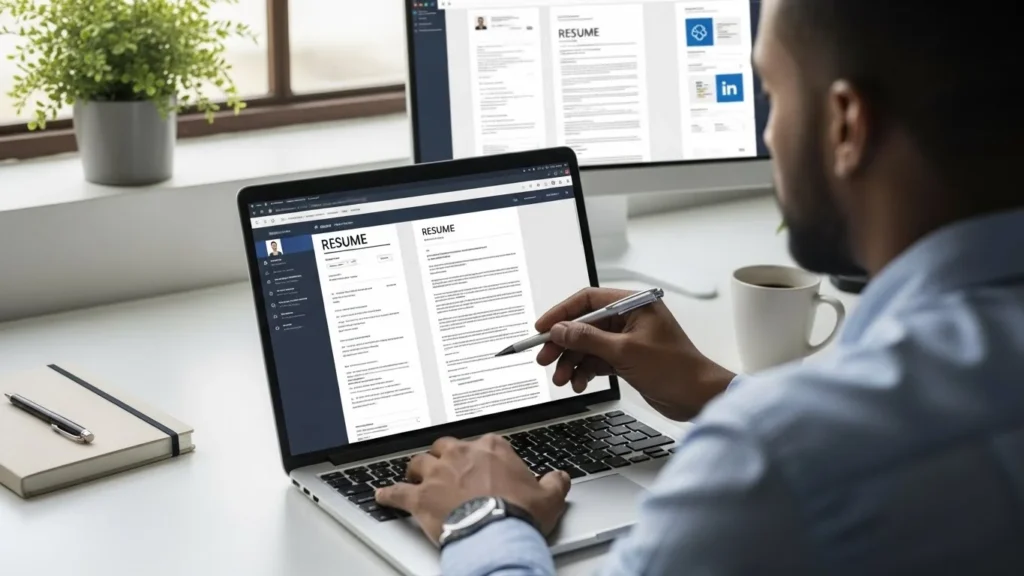
Craft a Remote-Ready Resume
Your resume should emphasize:
- Remote work experience
- Tools you’re comfortable with (Slack, Trello, Zoom, etc.)
- Clear outcomes and achievements
This helps European employers assess your remote readiness quickly.
Create an Online Portfolio
An easy-to-navigate portfolio on platforms like Behance, GitHub, or a personal website showcases your best work and enhances credibility.
Finding Remote Job Opportunities in Europe
There are several ways to find remote job opportunities:
Best Remote Job Platforms
Popular platforms include:
- Remote OK
- We Work Remotely
- FlexJobs
- Europe-specific job boards
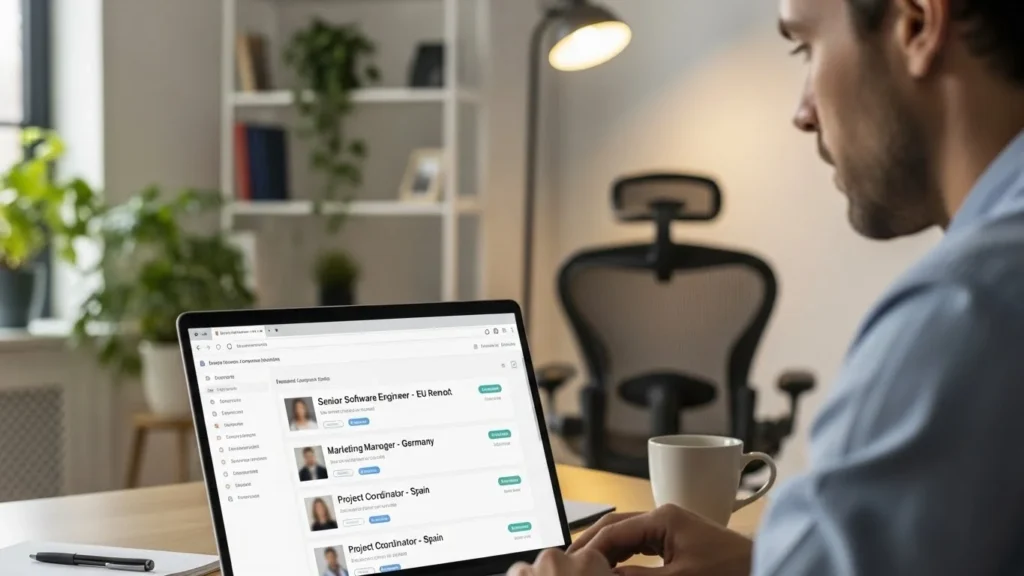
These sites list remote jobs in Europe with filters for skill, salary, and job type.
Leveraging LinkedIn
Use LinkedIn to:
- Optimize your profile for remote work
- Follow European companies
- Connect with hiring managers
Contacting Companies Directly
If you have target companies in mind, reach out with a personalized message explaining how your skills align with their needs.
Understanding European Remote Work Culture

Work Expectations and Communication
European companies often emphasise clear communication, regular updates, and collaborative problem solving.
Professional Etiquette
Being punctual, respectful in communication, and proactive about tasks builds trust in remote teams.
Cultural Awareness
Europe is diverse, understanding cultural differences improves teamwork and avoids miscommunication.
Time Zones & Scheduling Strategies
Europe spans multiple time zones. To succeed:
- Find overlapping hours for meetings
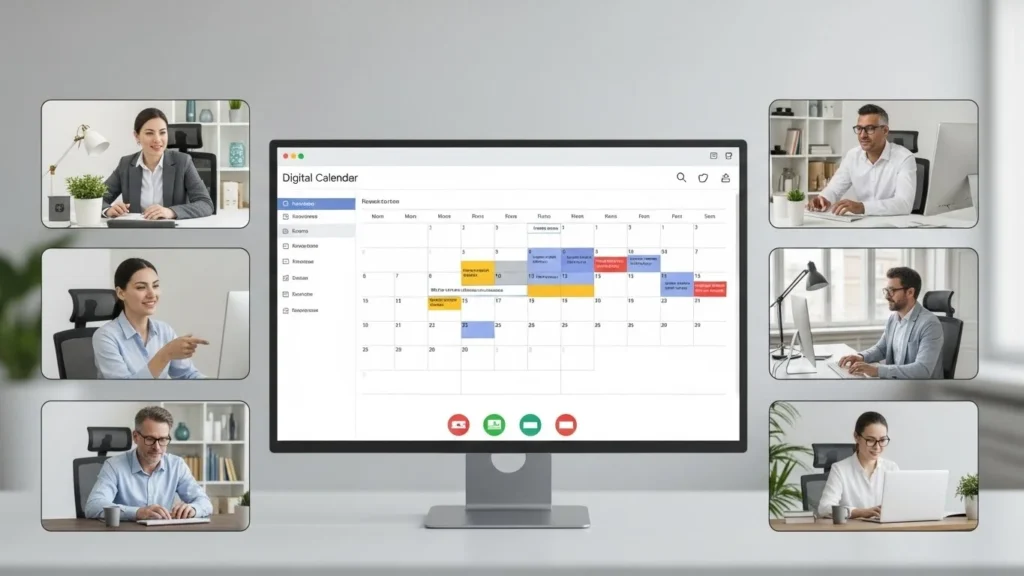
- Use shared calendars (Google Calendar)
- Agree on communication windows with teams
Time awareness enhances reliability and reduces scheduling conflicts.
Essential Tools for Remote Work Success
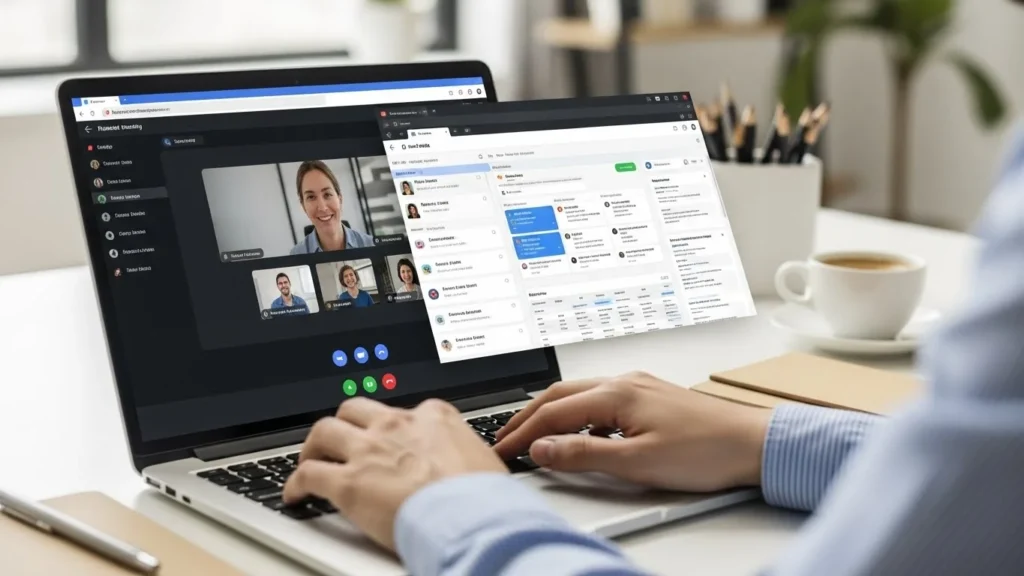
Communication Tools
Zoom: A reliable video conferencing tool used for virtual meetings, interviews, and team discussions with screen-sharing features.
Microsoft Team: An all-in-one communication platform that combines chat, video calls, file sharing, and collaboration in one workspace.
Slack: A real-time messaging tool that keeps remote teams connected through organised channels and instant communication.
Project Management Tools
- Trello: A visual task management tool that helps teams track work using boards, lists, and cards for clear workflow organization.
- Asana: A powerful project management platform that helps teams plan tasks, set deadlines, and monitor project progress efficiently.
- Jira: A specialized project tracking tool widely used for software development, allowing teams to manage tasks, bugs, and agile workflows.
Productivity Tools
Tools like Notion, Todoist, and Toggl assist with task tracking, notes, and productivity analysis.
Legal & Contractual Considerations
Work Contracts
Ensure your contract clearly defines:
Payment currency
Deliverables and deadlines
Intellectual property rights
Tax and Payments
Payment methods may include PayPal, Wise, or bank transfers. Understand your local tax implications when working with European clients.
GDPR and Privacy
European companies often comply with GDPR. Be mindful of data privacy standards when handling user information.

Tips to Stay Productive & Motivated

Time Management
Use time-blocking and focused work sessions to maximize productivity.
Build a Remote Routine
Establish start and end times, breaks, and review sessions to separate work from personal life.
Avoid Burnout
Balance workloads and schedule rest, consistent performance depends on your health and motivation.
Conclusion
Working remotely with European companies opens doors to international opportunities, diverse work cultures, and rewarding careers. By preparing your skills, optimizing your remote profile, understanding European work culture, and using the right tools, you can successfully build a remote career with global teams.
Ready to take your remote career to the next level?
Visit Leed Tech Services today and let our experts help you connect with top European remote opportunities!
FAQs
What skills do European companies look for in remote workers?
They value digital skills like development, marketing, design, project management, and communication tools experience.
How important is time zone overlap?
Time zone overlap is crucial for collaborative work and regular meetings, plan hours accordingly.
Do European companies hire internationally?
Yes, many European businesses hire global remote talent based on skills and experience.
What tools are essential for remote collaboration?
Communication (Zoom, Slack), project management (Asana, Trello), and productivity (Notion, Toggl) are commonly used.
Are contracts necessary for remote work?
Absolutely, clear contracts protect both parties and define payment, deliverables, and legal rights.