
Proving residency in Spain is an essential step for many administrative processes, including visa renewals, obtaining a TIE (Tarjeta de Identidad de Extranjero), or even accessing local healthcare and social services. While most people rely on rental contracts to demonstrate their residence, it is entirely possible to provide evidence without a formal lease. This guide explores practical strategies, legal documentation, and alternative proof methods to ensure you can establish residency in Spain confidently and compliantly.
What “Proof of Residency” Really Means in Spain
Residency proof in Spain is primarily concerned with demonstrating that an individual lives continuously at a particular address within the country. It is required for:
- Registering with local authorities (empadronamiento)
- Applying for a TIE/NIE
- Enrolling in schools or universities
- Accessing healthcare and social benefits

Although a rental contract or property deed is the most common document, Spanish law allows alternative forms of evidence. Authorities look for consistency and verifiable documentation showing that you live at a certain location.
The Importance of Empadronamiento
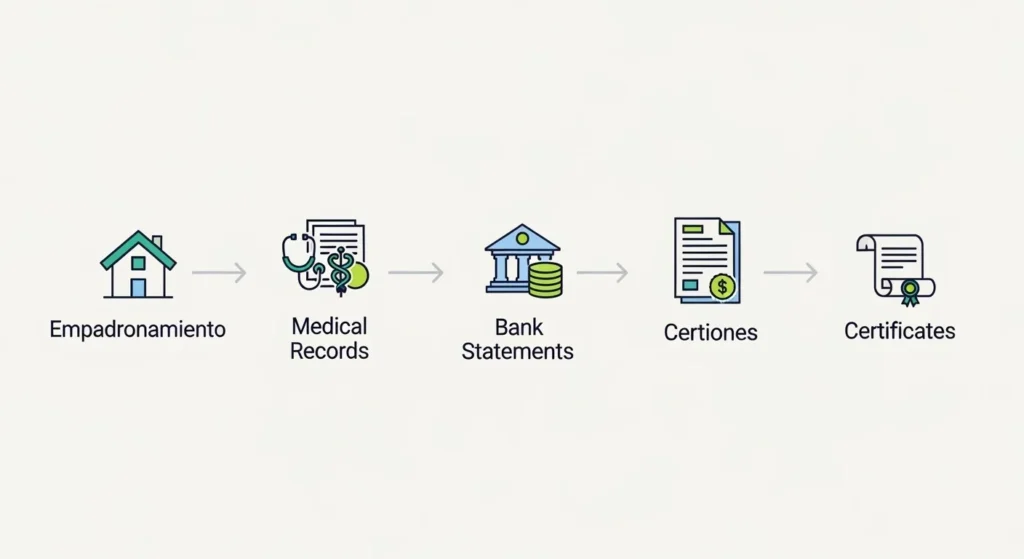
The empadronamiento is the municipal register of residents. Being registered in the padrón municipal is one of the most recognised ways to prove your residence.
Why it matters:
- Confirms your official address
- Provides access to healthcare (Seguridad Social)
- Supports applications for visas, work permits, or school enrolment
Even without a rental contract, you can still register if you provide alternative proof of residence, such as:
- A notarised authorisation from a property owner
- A certificate of cohabitation (volante de convivencia)
- Utility bills in the resident’s name
Tip: Always keep your empadronamiento up to date, as authorities may check your continuous presence over time.
Alternative Documents to Prove Residency

If you do not have a formal lease, several other documents can establish your residence legally:
Financial and Employment Records
- Payslips showing deductions for local taxes
- Bank accounts tied to your Spanish address
- Social Security contributions
Utility Bills and Official Correspondence
- Electricity, water, gas, or internet bills in your name
- Bank statements sent to your address
- Official letters from government agencies
These demonstrate a regular presence at your residence.
Medical and Educational Documentation
- Registration with a local GP or clinic
- School records for children living at your address
- Vaccination certificates issued locally
Certification of Cohabitation or Volante de Convivencia
- Local town halls may issue a volante de convivencia, a document confirming you live at a property, even if you are not the owner
- Often requires owner authorisation or signatures from cohabitants
These documents collectively help demonstrate your continuous stay in Spain.
Strategies When You Have No Formal Rental Contract
Even without a lease, there are practical ways to satisfy authorities:
- Authorisation Letters: A signed statement from the property owner confirming your stay
- Neighbour Testimonies: Some municipalities may accept declarations from neighbours or community associations
- Digital Footprint Evidence: Subscriptions, official letters, or bank statements can supplement your claim
Spanish administrative authorities value consistency. Ensure that all documents are dated, official, and verifiable.
Legal and Administrative Insights
Spanish law provides flexibility when proving residence. According to the Ley de Extranjería and local municipal regulations:
- Residency proof is not limited to rental contracts
- Authorities may accept a combination of documents showing continuous presence
- The goal is to demonstrate a stable and habitual residence

It is crucial to avoid gaps in your evidence. Even short-term absences may require explanations or supporting documents.
Final Thoughts
Proving residency in Spain without a rental contract is entirely feasible. By combining empadronamiento, utility bills, official correspondence, and cohabitation certificates, you can establish your legal residence effectively.
Maintaining consistent documentation and staying informed about local regulations ensures that your applications for visas, TIE, or social services are processed smoothly.
FAQs
Can I use a friend’s or family member’s address to register?
Yes, with a notarised authorisation letter from the property owner and supporting evidence of cohabitation.
Are utility bills mandatory to prove residency?
Not strictly. They are highly recommended as supplementary evidence, especially if no rental contract exists.
How long must I have lived at an address to prove residency?
Authorities generally require continuous residence for at least three to six months, depending on the purpose (visa, healthcare, or TIE).
Can empadronamiento be used for all official purposes?
Yes, but sometimes additional documents like bank statements, employment records, or cohabitation certificates may be requested.