Spain is seeking skilled workers in sectors like welding, electrical work, IT, and healthcare. Industrial vocational training in Spain offers foreign nationals a practical path to legal residence, work visas, and long-term residency. Accredited courses provide in-demand skills while integrating learners into Spain’s labour market, making it a smart residency strategy.
Spain has a dynamic economy that welcomes skilled workers across key industrial sectors, yet navigating the legal pathways to reside and work in the country can be complex. Among the emerging strategies gaining attention is industrial vocational training in Spain, combining professional education with a step towards legal residence. This article explores how vocational education can be leveraged as an effective residency strategy in Spain, particularly through recognised training programmes and legal frameworks that support foreign nationals seeking to build a life and career in the Spanish labour market.
What Is Industrial Vocational Training in Spain?
Understanding Vocational Training
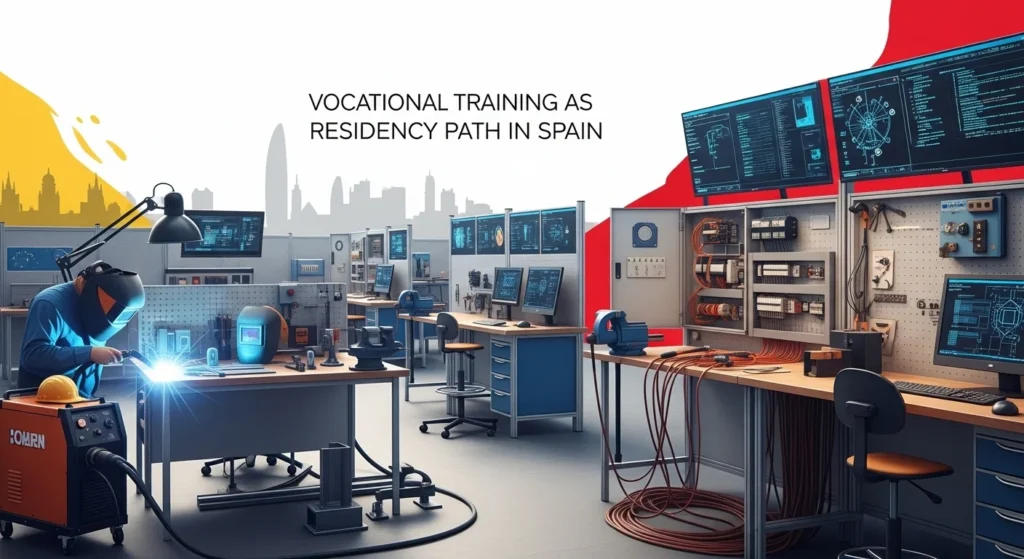
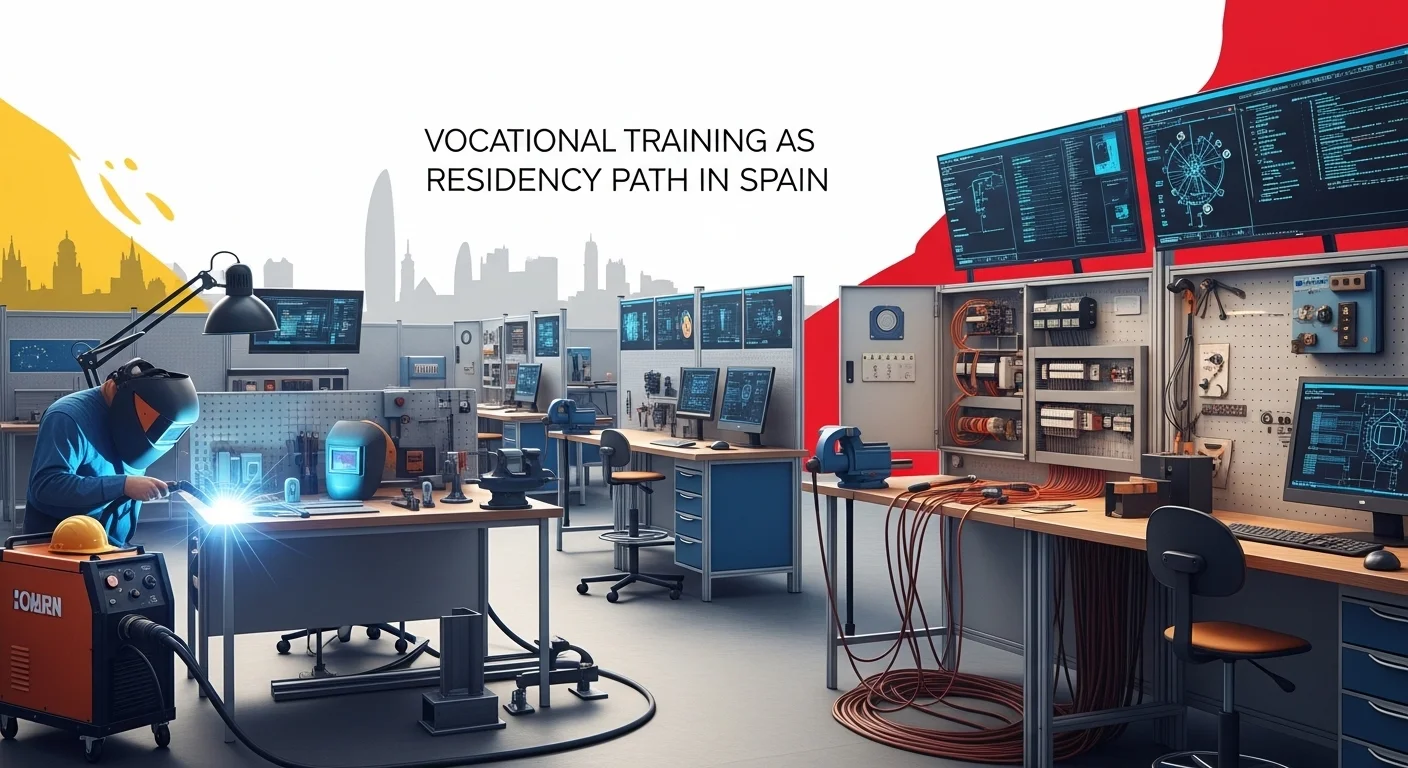
Industrial vocational training in Spain refers to structured technical education designed to impart practical skills linked directly to employment sectors such as manufacturing, electrical work, welding, logistics, information technology, healthcare and more.

These programmes are part of Spain’s broader Vocational Educational and Training (VET) system, covering multiple qualification levels from basic to higher qualifications recognised nationwide.
Types of Qualifications
Spain’s vocational training is typically categorised under Formación Profesional (FP) qualifications. These include:
- Basic Level FP: introductory vocational skills.
- Intermediate Level FP: practical, job‑oriented training.
- Higher Level FP: advanced technical expertise, often equating to post‑secondary qualifications.
Each level combines classroom theory with practical workplace modules to ensure graduates are ready to work in real industrial settings.
The Dual Training Model
Alongside traditional classroom training, Spain increasingly emphasises “Dual” apprenticeship models. These combine educational instruction with workplace experience facilitated through agreements between training centres and employers, benefiting both learners and industry.
How Vocational Training Ties to Residency Strategies
Legal Pathways for Residency
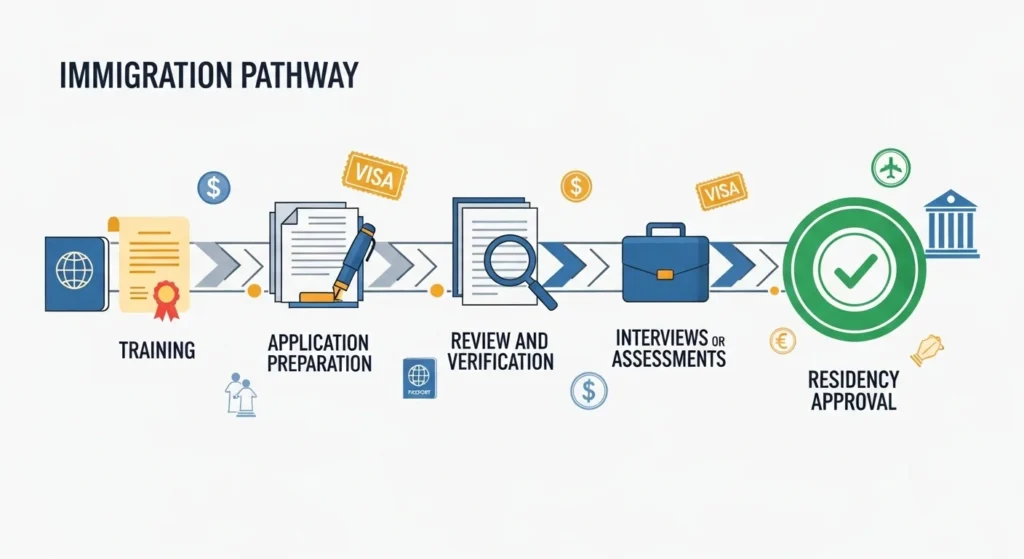
Vocational training can serve as more than education, it can support legal residence applications in Spain under certain immigration laws.
Spain’s immigration regulation has evolved to offer some pathways where foreign nationals can obtain temporary residence in exchange for enrolling in certified training programmes known as the Training Arraigo (Arraigo para la Formación or Arraigo Socioformativo).
Under these specific provisions, individuals, including those previously in irregular status, may secure legal residency by committing to a vocational training curriculum recognised by Spanish authorities. Training must be official, accredited and aligned with labour market demands to qualify.
Work Authorization Considerations
It is important to note that in many cases, initial residency based purely on training does not automatically grant full work authorization; it primarily serves as a legal residence permit while the training is underway. However, updated policies in 2025 allow certain socioformative residence holders to work part‑time (e.g., up to 30 hours per week) while completing training, reducing barriers for integration into the workforce.
Transitioning to Employment
Once vocational training is completed, holders of a training‑based residence can often apply to modify their status to a work permit (either employee or self‑employment/freelance status). This transition typically requires:
- Proof of successful training completion.
- A valid job offer or contract.
- Compliance with Spanish employment and visa regulations.
This pathway effectively integrates vocational education with longer‑term residency ambitions, especially for individuals seeking to transform technical skills into gainful employment in Spain.
Why Industrial Vocational Training Is a Suitable Strategy for Residency
Bridging Skills & Demand
Spain’s industrial sectors frequently call for certified professionals, from automation technicians and welders to IT specialists and healthcare assistants.

Vocational training equips students with recognised credentials directly relevant to these markets, helping them become skilled workers in Spain with competitive profiles.
Shorter Timeframes vs Traditional Degrees
Industrial vocational training often requires less time than traditional university degrees, allowing faster entry into the labour market and quicker pathways to modify a training visa into a long‑term residence or work permit.
Recognition & Mobility
FP qualifications, once achieved, are recognised across Spain — making holders attractive candidates to employers in diverse regions from Catalonia to Andalusia.
Practical Steps to Use Vocational Training as a Residency Strategy
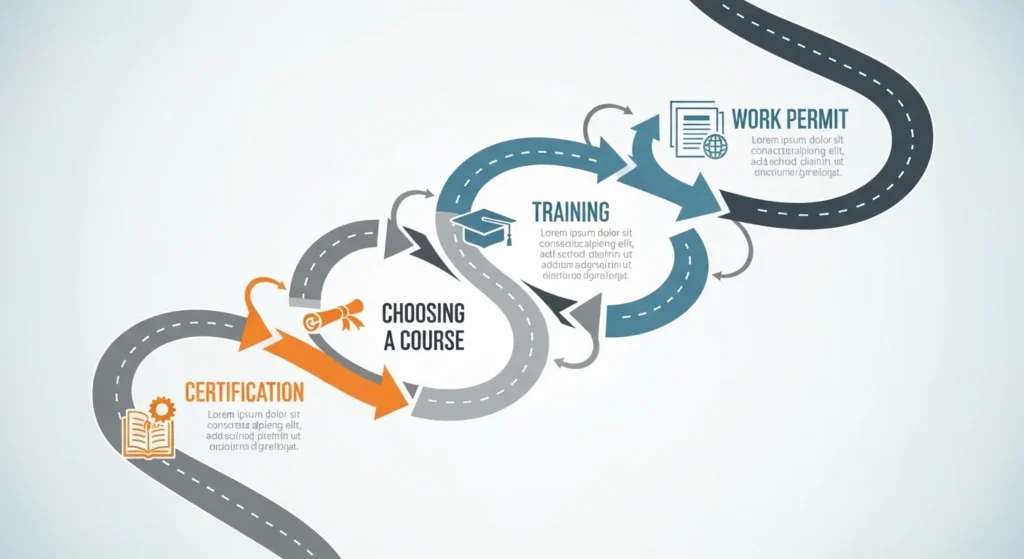
Choose Accredited Programmes
Opt for officially recognised industrial vocational courses that align with high‑demand employment sectors. Verify accreditation with Spain’s vocational education authorities to ensure eligibility for training‑based residence.
Secure Legal Entry or Stay
If outside Spain, obtain the appropriate study visa for vocational courses (which covers training longer than 90 days) ahead of arrival. Ensure your documentation, academic records, financial proofs, medical insurance, and consulate requirements.
Complete Training Successfully
Engage fully with the training programme, including practical modules and evaluations. Completion is critical for later applications to modify residence and work status.
Apply for Modification to Work Permit
After training, gather certificates, job contracts or offers, and follow official procedures to switch your training residence permit to one that includes employment rights. This is often facilitated through Spain’s immigration authorities or legal counsel.
Key Industrial Sectors Currently in Demand
Industrial vocational training covers a wide range of sectors that map onto Spain’s evolving labour needs:
- Manufacturing & Mechatronics
- Electrical & Electronics Installation
- Information Technology & Software Support
- Healthcare Assistant & Nursing Support
- Logistics & Supply Chain Operations

Programmes in these fields often include hands‑on placements and can substantially improve employability once training is completed.
Challenges & Considerations

- Language Barriers: Most vocational training in Spain is delivered in Spanish or local co‑official languages. Prospective students may need to demonstrate a certain proficiency level to enrol.
- Financial and Administrative Hurdles: Training, living costs and application fees must be budgeted carefully. Additionally, navigating visa and residence permit processes requires meticulous document preparation.
- Eligibility Requirements: Each training‑based permit has specific conditions, including residency history, criminal records, and proof of enrolment in accredited p
Final Thoughts
Industrial vocational training in Spain offers a highly practical and strategic pathway to legal residency and employment, particularly for foreign nationals seeking alternatives to traditional university routes or employer‑sponsored work visas. By aligning recognised technical education with evolving labour market demands, and through careful navigation of immigration frameworks, vocational training can help aspiring professionals achieve both industrial skill credentials and an effective residency strategy in Spain. With the right planning and support, this approach not only opens doors to skilled work but also lays the foundation for long‑term settlement and career advancement.
FAQs
Can vocational training alone secure permanent residency in Spain?
No, vocational training helps obtain temporary residence and creates pathways to work permits; permanent residency typically requires continuous legal residence for several years.
Is Spanish language proficiency mandatory for industrial vocational training?
Yes, many programmes are taught in Spanish, and some centres may require proof of language proficiency before admission.
Do vocational training programmes count towards citizenship requirements?
Time spent on training visas may count toward residency requirements, but citizenship has separate criteria and timelines.
Can family members accompany a training‑based resident?
Family reunification options depend on visa type and immigration status, not all training visas automatically allow dependants.
What happens if I complete training but cannot find a job?
Without a job offer, changing your residence permit to work authorisation can be challenging, and you may need alternative legal pathways.