
The European job market is undergoing a major transformation. With skills shortages, globalization, remote work, and changing workforce expectations, talent mobility has become a critical strategy for HR professionals across Europe. This blog explains what talent mobility is, why it matters in today’s European labor market, and how HR leaders can leverage it to attract skilled professionals, fill workforce gaps, and stay competitive. You’ll also learn about key trends, benefits, challenges, and practical HR strategies shaping the future of work in Europe.
What Is Talent Mobility?
Talent mobility refers to the movement of employees across roles, locations, departments, or countries to meet organizational needs. In the European context, it often includes:
- Cross-border hiring within the EU
- Internal mobility within multinational companies
- International assignments and relocations
- Temporary, project-based, or contract work
- Remote and hybrid workforce models

For HR professionals, talent mobility is no longer optional, it is a strategic workforce solution.
Why Talent Mobility Matters in the European Job Market

Europe is undergoing a major transformation in the way workforces are built and managed. Multiple structural and economic challenges are pushing organizations to rethink traditional hiring models, making talent mobility a strategic necessity rather than a choice for HR professionals.
Skills Shortages Across Key Industries
Many European industries are facing persistent talent gaps, particularly in IT, healthcare, engineering, construction, manufacturing, and logistics. Local labor markets often cannot supply the specialized skills required for modern projects. Talent mobility enables companies to tap into a wider, cross-border talent pool, ensuring critical roles are filled without long delays and allowing businesses to maintain productivity and growth.
Ageing Workforce
Several European countries are experiencing a rapidly ageing population, leading to a shrinking active workforce. As experienced employees retire, organizations risk losing essential knowledge and operational capacity. International hiring and mobility programs help offset demographic decline, ensuring continuity, supporting knowledge transfer, and maintaining long-term workforce stability.
Economic Imbalances Between Regions
Europe is marked by uneven employment patterns. While some regions struggle with high unemployment, others face severe labor shortages. Talent mobility helps bridge this gap by aligning workforce supply with market demand, benefiting both employers and workers. This balanced distribution of talent supports regional development and strengthens the overall European economy.
Global Competition for Talent
European companies are no longer competing solely with local employers. Global organizations actively recruit top talent across borders, offering flexibility, relocation opportunities, and career growth. Companies with strong and adaptable talent mobility policies are better positioned to attract, retain, and deploy skilled professionals faster than competitors relying on traditional hiring approaches.
Key Types of Talent Mobility in Europe
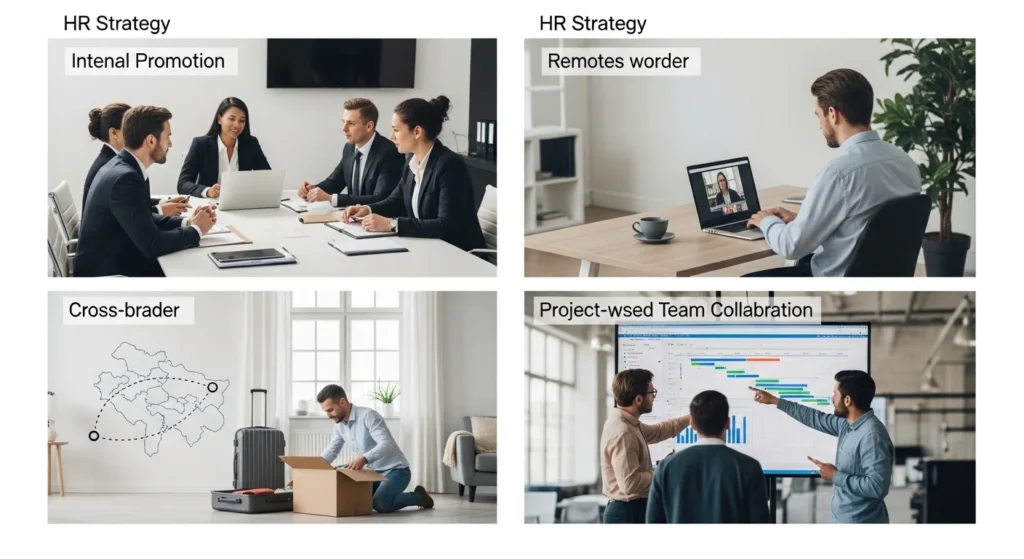
Talent mobility in Europe takes several forms, allowing organizations to remain flexible, competitive, and resilient in a rapidly changing job market. For HR professionals, understanding these mobility models is essential to building effective workforce strategies.
Internal Talent Mobility
Internal mobility refers to employees moving into new roles, departments, or leadership positions within the same organization. This approach helps companies retain top talent, preserve institutional knowledge, and reduce recruitment and on-boarding costs. It also supports employee development, engagement, and long-term career growth.
Cross-Border Talent Mobility
Cross-border mobility involves hiring professionals from other European countries or from outside the EU to address labor shortages. Supported by EU freedom of movement frameworks, this model allows employers to quickly access scarce skills while promoting cultural diversity and knowledge exchange within organizations.
Project-Based and Contract Mobility
Project-based and contract mobility enables companies to bring in skilled professionals for short-term or specialized assignments. This approach is ideal for industries with fluctuating workloads, allowing organizations to scale their workforce efficiently without long-term employment commitments.
Remote Talent Mobility
Remote talent mobility allows companies to hire skilled professionals across borders without physical relocation. Enabled by digital collaboration tools and remote work policies, this model reduces relocation costs while giving employers access to a global talent pool and offering workers greater flexibility.
Benefits of Talent Mobility for HR Professionals

Talent mobility is no longer just a recruitment strategy, it’s a powerful workforce management tool. For HR professionals, adopting talent mobility delivers both short-term efficiency and long-term organizational value.
Faster Hiring Processes
By accessing a wider and more diverse talent pool, organizations significantly reduce time-to-hire. Cross-border and remote mobility eliminate geographic limitations, enabling HR teams to fill critical roles faster.
Improved Workforce Agility
Talent mobility allows companies to quickly adapt to market changes, seasonal demands, and project-based needs. HR teams can redeploy skills where they are needed most, ensuring business continuity and operational flexibility.
Higher Employee Retention
Internal mobility programs encourage employees to grow within the organization rather than seek opportunities elsewhere. This increases engagement, job satisfaction, and loyalty, while reducing employee turnover.
Cost Optimization
Recruiting talent from regions with high skill availability can lower recruitment, onboarding, and training expenses. Internal transfers also minimize external hiring costs and reduce the risk of poor hiring decisions.
Increased Diversity and Innovation
A mobile workforce brings together professionals from different cultural and professional backgrounds. This diversity fosters creativity, encourages new perspectives, and leads to stronger problem-solving and decision-making across teams.
Challenges HR Professionals Must Manage
While talent mobility offers strong advantages, it also presents challenges:
- Legal and compliance issues across countries
- Visa and work permit processes
- Cultural integration and communication gaps
- Relocation and on-boarding costs
- Payroll, taxation, and labor law complexities

Successful HR teams overcome these challenges through structured mobility programs and expert support.
How HR Professionals Can Build a Strong Talent Mobility Strategy

Building an effective talent mobility strategy requires more than moving people between roles or countries. For HR professionals, it means creating a structured, compliant, and employee-centric approach that supports both business growth and workforce satisfaction.
Align Talent Mobility with Business Goals
Talent mobility should be driven by long-term organizational objectives, not only immediate staffing gaps. HR teams must ensure that mobility initiatives support business expansion, innovation, and future skill requirements while strengthening leadership pipelines.
Invest in Strategic Workforce Planning
Data-driven workforce planning helps HR professionals anticipate skills shortages and mobility needs before they become critical. By analyzing workforce trends, retirement risks, and project demands, companies can proactively deploy talent where it creates the most value.
Simplify Compliance and Legal Processes
European labor regulations vary by country and can be complex. Partnering with experienced workforce and talent mobility providers helps HR teams manage visas, work permits, tax compliance, and employment laws efficiently, reducing risk and administrative burden.
Enhance the Employee Mobility Experience
A successful mobility strategy prioritizes employee well-being. Providing relocation support, cultural onboarding, language assistance, and clear career development paths improves employee satisfaction and increases the success rate of mobility assignments.
Leverage Technology for Mobility Management
Modern HR technology platforms simplify international hiring, documentation, payroll coordination, and performance tracking. Digital tools enable HR teams to manage mobile talent more efficiently while maintaining transparency and control across borders.
The Future of Talent Mobility in Europe
Talent mobility will continue to shape Europe’s workforce through:
- Increased cross-border collaboration
- Stronger demand for flexible employment models
- Digital-first recruitment strategies
- Skills-based hiring rather than location-based hiring

For HR professionals, embracing talent mobility is key to staying competitive in an evolving job market.
How LeedTech Services Supports Talent Mobility

At LeedTech Services, we help organizations navigate talent mobility by connecting them with skilled professionals across Europe. Our solutions are designed to support HR teams with:
- Skilled workforce sourcing
- Cross-border recruitment support
- Compliance-aware hiring solutions
- Industry-specific talent matching
Conclusion
Talent mobility is redefining how Europe works. For HR professionals, it offers a powerful way to overcome skills shortages, improve agility, and future-proof their organizations. Companies that adopt smart mobility strategies today will lead tomorrow’s workforce.
Now is the time to rethink traditional hiring models and embrace a more flexible, global approach to talent.
FAQs
What is talent mobility in HR?
Talent mobility is the movement of employees across roles, locations, or countries to meet organizational needs and support business growth.
Why is talent mobility important in Europe?
Due to skills shortages, aging populations, and economic differences, European companies rely on talent mobility to remain competitive.
Does talent mobility only mean international relocation?
No. It also includes internal role changes, project-based work, remote hiring, and short-term assignments.
How can HR manage compliance in cross-border hiring?
By partnering with experienced workforce solutions providers and staying updated on European labor laws.
Is talent mobility suitable for small and medium-sized companies?
Yes. With the right strategy and support, SMEs can also benefit from flexible talent mobility models.