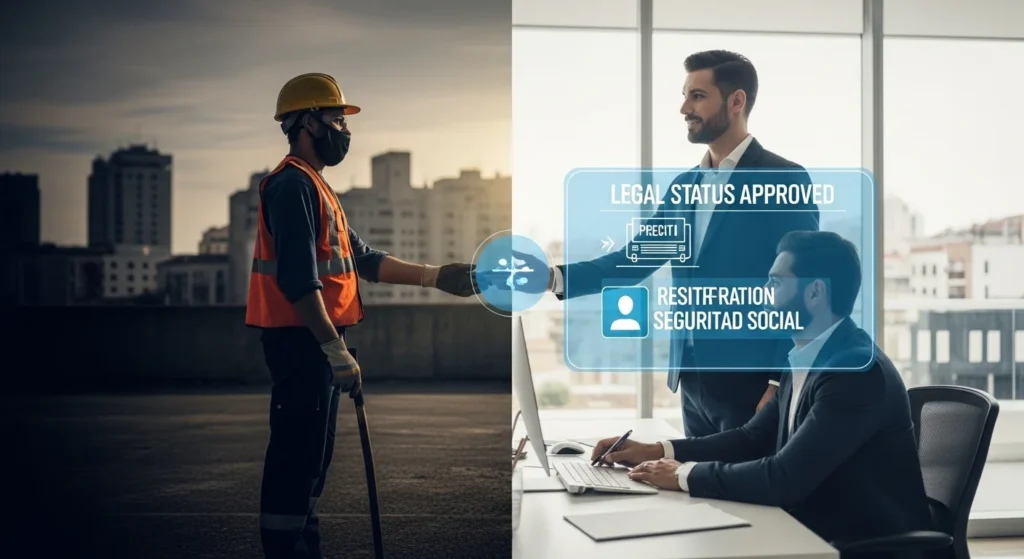

Spain’s government has introduced an unprecedented extraordinary regularisation process in 2026 to grant legal residence and work rights to hundreds of thousands of undocumented migrants. This historic move is intended to integrate migrants already living in Spain, improve labor rights, and provide legal protections that were previously unavailable.
In this comprehensive guide from LeedTech Services, you’ll completely understand about qualifying for the amnesty, how to apply, the documents required, important deadlines, legal rights, work permits, and key tips to improve your chances of success.
What Is the 2026 Spanish Amnesty (Extraordinary Regularisation)?
In January 2026, the Spanish Council of Ministers approved a royal decree launching a one‑time extraordinary regularisation programme for foreign nationals already living in Spain without legal status. This measure is expected to provide residence and work permits to roughly 500,000 undocumented migrants and some reports suggest the number could be even higher.
The aim of this regularisation is to address the reality of large numbers of undocumented residents, strengthen social cohesion, and support economic growth through expanded legal labour participation. Unlike ordinary immigration law, this process does not go through the Spanish parliament; it is being implemented by royal decree, allowing faster adoption and fewer political barriers.
Who Can Apply for the 2026 Amnesty? Eligibility Criteria

To qualify for the 2026 Spanish amnesty, applicants must meet the following core requirements:
Presence in Spain Before December 31, 2025
Applicants must prove that they were already present in Spain at some point before 31 December 2025.
Minimum Continuous Residence (5 Months)
In addition to the cut‑off date, applicants must demonstrate at least five months of continuous residence in Spain before submitting their application.
This means that merely entering Spain before the deadline is not enough, applicants must show they have lived in the country continuously for a period leading up to their application.
Clean Criminal Record
Applicants must not have a criminal record or pose a threat to public order. This applies to Spain and, in many interpretations, their country of origin.
Asylum Seekers
Individuals who applied for international protection before 31 December 2025 are also eligible, even if they are still awaiting a decision.
Important Deadlines You Must Know
The Spanish government has outlined anticipated key dates for the regularisation process:
Application Window: Expected to open in early April 2026.
Application Deadline: Likely to close on 30 June 2026.

Processing Time: Once submitted and accepted, decisions should be made within three months, although provisional authorisation to work may be issued much sooner (often within 15 days).
Failing to apply by the deadline could result in automatic rejection, even if you are otherwise eligible, so timely preparation is crucial.
What Documents Are Needed to Apply

One of the most important aspects of successfully applying is collecting the right documents. The good news is that Spain allows flexible evidence to prove residence and identity.
Proof of Residence (Any of the Following):
✔ Municipal registration (padrón)
✔ Utility bills (electricity, water)
✔ Medical appointment records
✔ Rental contract or receipts
✔ Money transfer receipts
✔ Transportation tickets or mobile receipts
Authorities are expected to accept a combination of these documents to prove continuous residence for at least five months.
Criminal Record Certificate:
You may need a police clearance certificate or evidence showing no serious criminal record in Spain or your home country.
Identity Documents:
Passport, national ID, foreigner ID (if any), or other identity papers.
Having documents with official translations and apostilles may help streamline your application.
Step‑by‑Step: How to Apply for the 2026 Spanish Amnesty
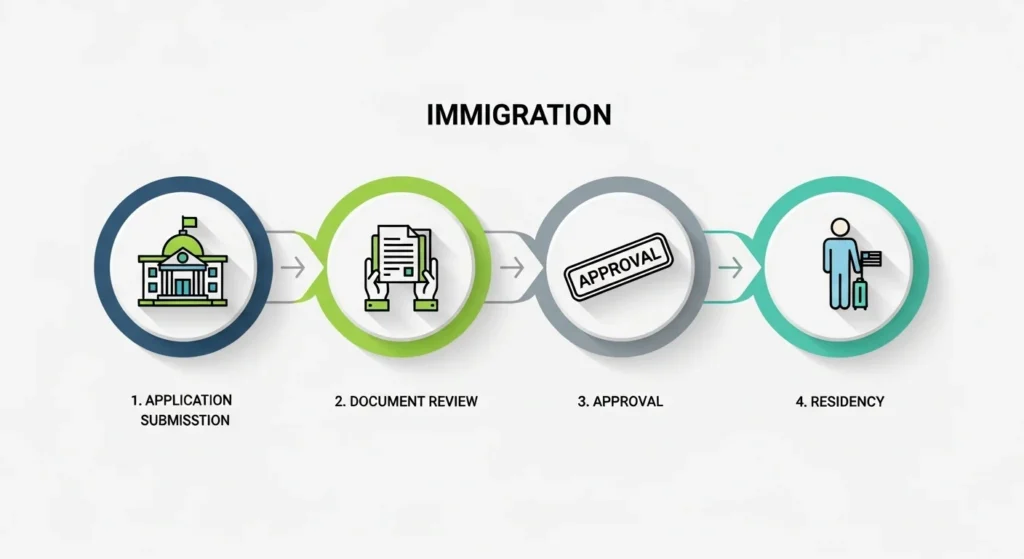
Here’s a clear, actionable road-map to guide you through the process:
Gather Your Documents
Start today, don’t wait until the application opens. Collect residency proofs, identity documents, criminal record certificates, and any supporting evidence you have.
Check Eligibility Requirements
Ensure you meet the core criteria: presence in Spain before 31 December 2025 and at least five months of continuous residence. Review your documents to confirm they support this.
Legal Advice (Optional but Recommended)
Although not required, seeking assistance from an immigration lawyer or accredited adviser can help strengthen your application and avoid mistakes.
File Your Application
Applications are expected to be submitted either online through official immigration portals or in person at designated Social Security or immigration offices once the window opens in April 2026.
Provisional Approval & Rights
Once your application is accepted for processing, often within 15 days, you will typically be granted a provisional residence authorization. This allows you to work legally anywhere in Spain.
Final Decision
Final decisions will be issued within about three months. Successful applicants will receive a formal residence permit.
Work Permits, Healthcare & Social Security

One of the biggest benefits of this amnesty is that once your application is accepted for processing, you gain:
- Legal right to work in any sector across Spain
- Access to public healthcare
- Ability to register for social security and benefits
- Legal protection from deportation while your case is processed
- This immediate eligibility to work is a game‑changer for undocumented residents.
What Happens to Family Members?
The regularisation process also allows the simultaneous legalisation of minor children who live in Spain alongside the applicant. These children are typically granted longer‑term permits (up to five years).
Family reunification pathways may be available later under standard immigration rules once the initial permit period ends.
After You Get Regularised: Next Steps
Once you receive your initial permit (usually for one year):
Renew or Change Your Permit
You can later transition to more permanent residency categories under Spain’s immigration regulations, such as:
- Work‑based residency
- Family reunification permits
- Long‑term residence after continued compliance
Apply for Permanent Residency or Citizenship
After meeting additional requirements like continuous residence, clean record and language tests, you may become eligible for permanent residency or citizenship in the future.
Debates & Criticisms: What You Should Know
While this amnesty is widely regarded as historic and beneficial for many migrants, it has sparked political debate:
Some conservative and right‑wing groups oppose the regularisation, arguing it might encourage irregular migration.
Others support it as a humane and practical response to a long‑standing reality of undocumented residents contributing to Spain’s society and economy.
The programme’s focus is on people already present in Spain, not new arrivals, and authorities have emphasized that deadlines and eligibility requirements are strict to prevent misuse.

Common Mistakes to Avoid
- Waiting too long to gather documents
- Providing incomplete evidence of residence
- Missing the application deadline
- Ignoring legal advice when unclear
- Attempting to falsify documents (this can lead to disqualification)
Conclusion
The 2026 Spanish Amnesty presents a valuable opportunity for undocumented residents to obtain legal status, secure work authorization, and access essential services such as healthcare and social protection. With the expected application period between April and June 2026, applicants should begin preparing as early as possible by gathering proof of residence, reviewing eligibility criteria, and ensuring all required documentation is ready to avoid delays or rejection.
This initiative reflects Spain’s commitment to social inclusion and economic growth, marking one of the most important immigration reforms in recent years. If you need professional guidance or support with your application process, LeedTech Services is here to help. Our team provides reliable information, step-by-step assistance, and practical solutions tailored to your situation. With the right preparation and trusted assistance, you can take confident steps toward a more secure and stable future in Spain.
FAQs
When can I apply for the 2026 Spanish amnesty?
Applications are expected to open in early April 2026 and close by 30 June 2026.
Am I eligible if I entered Spain before 2025 but have only 4 months of continuous residence?
No. You must demonstrate at least five months of continuous residence in Spain before applying.
Can my children apply with me?
Yes. Minor children living with you in Spain can be included and typically receive permits valid for five years.
Do I need to have a criminal record certificate?
Yes. You must show no non‑cancellable criminal history to qualify.
Can I work while my application is processed?
Yes. Once your application is accepted within 15 days, you are legally authorised to work anywhere in Spain.
What if I applied for international protection (asylum)?
If you filed your asylum application before 31 December 2025, you can apply through this regularisation process.